
Health tourism providers do not operate in isolation. Of necessity, they work closely with a wide array of partners and organizations such as hotels, transport services, food and beverage outlets, cultural attractions and events, and much more.
Health tourism requires cooperation at various levels:
- At the local level, service providers such as hospitals, clinics, spas, accommodation services, shops, local government, etc. have their own distinct roles. Although health tourists are interested in either the outcomes of the medical procedures or the rejuvenating and relaxing effects of wellness services, they have experiences outside the hospital or wellness hotel, which contribute to or detract from their overall experience.
- At the regional level, health destinations seek partnerships with the major transport hubs as much as with the neighboring attractions. The health tourism destination may be a significant distance away from the main transport hub (e.g., international airport or motorway). One of the key elements of success is to provide easy and seamless access to the destination. That may require a shuttle service (paid or complimentary) or synchronized timetables with public transport to and back from the transport hub.
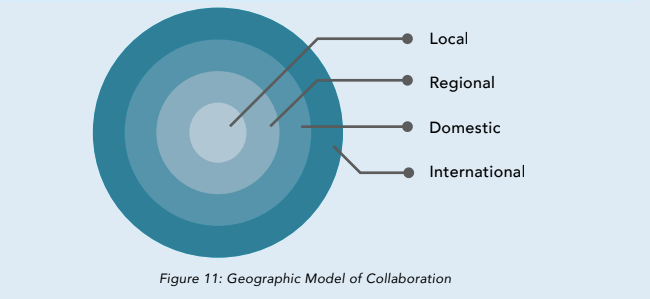
- At every geographic and organizational level, health destinations need rich networks of partners, including destination management organizations, regional tourism and health boards, insurance companies, specialty suppliers, physicians (in medical tourism), governmental bodies, as well as hotel association, schools offering hospitality, and other specialist education.
- At the international level, networks such as industry associations (e.g., European Spas Association) and destination collaborations (e.g., Royal Spas of Europe), as well as distributors and other sales representatives, information offices, and embassies or consulates, can all help make the destination competitive and successful. Country tourism offices as well as specialist agencies (e.g., Malaysia Healthcare Tourism Council) can support the local service providers in the destinations.
- Every touch point in the consumer’s journey, must demonstrate COVID-19 safe procedures and behavior. These collaborations – especially those at the local level – are often formed as a Destination Management Organization (DMO). The VICE-model (Visitors / Industry / Community / Environment) for destination management demonstrates exactly how joint efforts focus on the visitors, the local community, and the local businesses alike to succeed and grow. DMOs are expected to harmonize the expectations, needs, and activities of the key stakeholders at a destination including the visitors, the tourism, and in our case the relevant health sector, as well as local residents. The overriding objective is to provide and foster optimal relationships within every component of the environment.

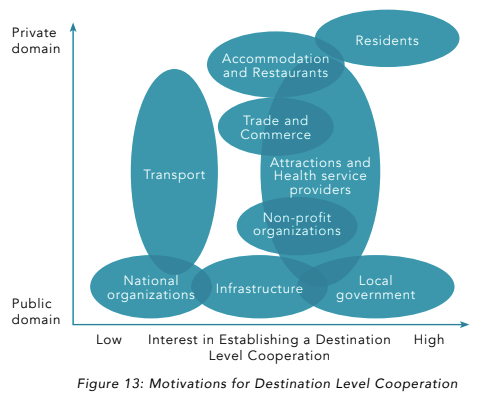
Motivations for, and obstacles to, these collaborations vary widely. Tourists expect seamless experiences, which require close cooperation; however, individual service providers may not see the direct benefits of such collaborations.
The recovery of travel markets after the pandemic shows the importance of cooperation. By developing, communicating and reinforcing safe policies and procedures across all travel segments, destination managers can measurably improve the business recovery for all service providers in their marketplace area.
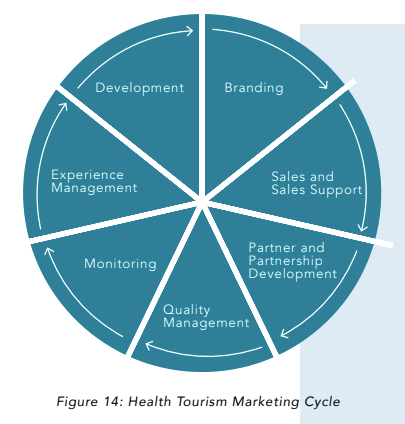
Best-in-class collaboration among service providers in a health tourism destination covers a range of tasks, from branding through monitoring and sales support. The most important focus is customer experience management and support. Some destinations manage this collaboration through specialist agencies (“kurdirektion” or “cure management”).
DMOs frequently take on certain duties from the local government, while representing the interests of businesses actively involved in health tourism. Such health tourism-focused destination management bodies can be found in some destinations with rich hot spring resources with healing properties, such as Baden-Baden in Germany.
Successful collaborations require coordinated efforts, including physical, human, and financial resources. Financial resources to pay for these collaborations can come from private sector partners through the purchasing of business- related communications, fees for monitoring, or sales support services, as well as from health tourist revenues directly in the form of tourism taxes. In some destinations, the money needed to support health travel coordination is derived from sales taxes, gambling, or sweepstakes proceeds. These collaborations are particularly important during public health emergencies such as the COVID-19 pandemic.
HEALTH TOURISM CLUSTERS
Many countries and destinations have adopted less structured forms of collaboration often referred to as “clusters.” This form of cooperation typically provides the interested parties with market intelligence, capacity building, and marketing services. Clusters may have a limited lifespan, with a mandate for a limited time and where the partners provide the necessary resources. One alternative for cooperation in the medical and wellness tourism markets is to involve both the private and the public sector at the national level.
Each competitive organization in a region where a cluster is operating needs to consider how much of their own energy and money will be spent promoting their individual competitive business, specialization, or niche. Presenting Your Offer in a clear and compelling way and tying this to collaborative or regional promotions (the cluster) can help both the region and your organization. Customers who choose your hotel, spa, clinic, or hospital are also – directly or indirectly – choosing the region and destination.
Collaborative marketing may benefit individual organizations; however, collective efforts are not a replacement for individual marketing and sales effectiveness.
The goals of all collaborations are to optimize positive and minimize the negative impacts of health tourism. Positive impacts include revenues, employment, and infrastructure development, which benefit the local population. Negative impacts include environmental harms caused by increased tourism, for example noise, air pollution, dirt, degradation of environmentally protected areas and exposure to communicable diseases.
These negative impacts can be reduced through deliberate visitor management methods, which can be successfully applied only through cooperation and collaboration.
Medical Tourism Associations and Clusters Survey 2018, the first survey of its kind in medical travel, among health tourism clusters, associations and others found important differences between what associations and clusters say is important (coordinating health tourism interests with governments), and what they measure (inbound patient numbers and treatment volumes).
While both activities are important, time spent lobbying the government does not lead to more international patients. These findings suggest that medical tourism associations and clusters are not effectively focused on or measuring their goals.
The study is available here: https://htww.life/references/studies-reports/
Resources:
Dimensions of Medical Tourism Clusters
Download request for white paper at https://www.medicaltourismtraining.com/medical-tourism-clusters/
Health Travel Clusters: Aligning Objectives and Measures of Success: https://www.medicaltourismtraining.com/medical-tourism-articles/health-travel-clusters-aligning-objectives-and-measures-of-success/
These negative impacts can be reduced through deliberate visitor management methods, which can be successfully applied only through cooperation and collaboration.
COMPETITION vs. COOPERATION vs. COOPETITION
At the very heart of every successful health tourism initiative are the highly competitive organizations attempting to attract and secure more business for themselves. This competitive energy can be seen in the way spas, hotels, hospitals, and local clinics work to attract more customers, improve customers’ experiences, and create competitive advantage. A provider’s competitive advantage, or “unique selling proposition” (USP) may be highly confidential and/or fiercely protected.
Encouraging highly competitive providers to cooperate is often difficult. How can collaboration be encouraged without sharing or diluting the competitive advantage of each provider?
- First, effective collaboration can increase the overall market for everyone. The old saying, “A rising tide floats all boats,” applies in this case. (See the case study on Hévíz.)
- Second, by adding value to the customers’ experiences, the lifetime value of each customer increases for each provider. This result can be seen in word-of-mouth referrals.
- Third, by coordinating and even occasionally sharing services such as transport, selected suppliers, entertainment, and cultural events, the direct and indirect operation costs can be reduced, thereby improving profit.
- Finally, collaborative efforts to reduce risks, such as COVID-19 benefit both the local populations and travelers.