
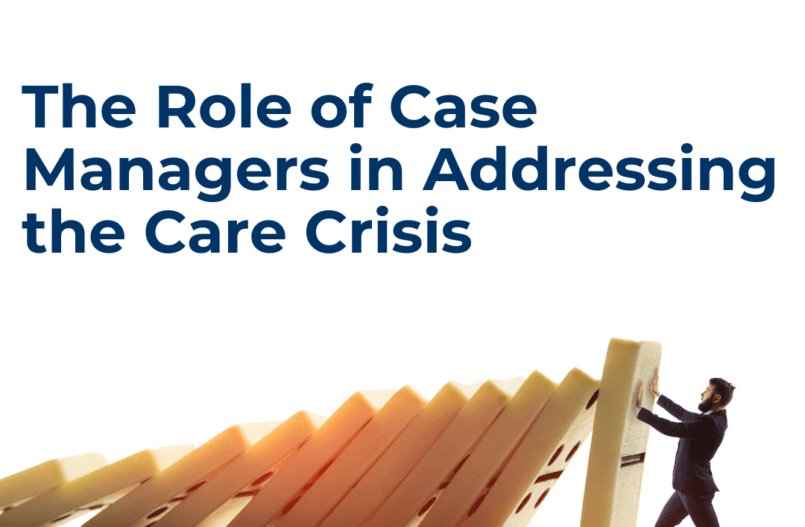
We are in the midst of a caring crisis in the United States’ healthcare system. Case managers can play a crucial role in navigating and mitigating this crisis, especially in the realm of chronic care and long-term support services.
Understanding the Caring Crisis
The caring crisis is multifaceted, rooted in an aging population, a fragmented care system, ageism, and significant unmet needs for long-term care. The current continuum of care in the U.S. is not well-coordinated, leading to inefficiencies and gaps in service delivery. This fragmentation is particularly detrimental for individuals with chronic conditions and the elderly, who require effective and efficient transitions between various types and venues of care.
The Importance of Case Managers
Case managers are uniquely positioned to address these challenges due to their training and expertise. They act as navigators within the complex healthcare landscape, helping patients and families understand and access the necessary services.
Let’s look at several key areas where case managers make a difference:
- Coordination of Care: One of the primary roles of case managers is to coordinate care across different providers and services. This includes ensuring smooth transitions from hospital to home care or from home care to long-term centers. Their involvement helps to reduce the likelihood of patients falling through the cracks due to poor communication between and among providers.
- Advocacy and Support: Case managers advocate for patients’ needs, ensuring they receive the appropriate level of care. They provide emotional support and practical guidance to families navigating the often bewildering world of healthcare services.
- Resource Management: They are adept at identifying and securing resources, from medical equipment to community support services, tailored to the specific needs of their clients. This skill is crucial in a system where resources are often scarce and unevenly distributed.
- Education and Empowerment: Case managers educate patients and families about their options and empower them to make informed decisions. This includes explaining insurance benefits and coverage, which can be particularly complex and varied across states.
Case managers are not just a luxury but a necessity in the current healthcare landscape. Their ability to bridge gaps, coordinate care, and advocate for patients makes them indispensable in addressing the caring crisis. As demand for chronic and long-term care services continues to rise, the role of case managers will become even more critical, highlighting the need for greater support and recognition of their contributions to the healthcare system.
For more on this, watch “Where Can We Turn? Case Managers and the Caring Crisis,” Presentation for CSMA Annual Conference 2024
—-
As always, it would be our pleasure to be of assistance as you navigate these difficult, changing times. You can contact Irving Stackpole directly by email: istackpole@stackpoleassociates.com or call +1-617-719=9530.
Irving Stackpole has decades of experience as a healthcare professional and has held leadership positions for global organizations, as well as hundreds of consulting clients on five continents as president of Stackpole & Associates Inc. He has led many cross-continuum collaborations in health and social care, developing recognized innovations in transition of care and social determinants of health in the U.S. and the U.K.