

The answer to this crucial question is at the center of the future success of your organization:
Who are the audiences for the services you plan to offer?
Individuals – and even organizations – make choices about where to go, which providers to use, and what services to consume based on their highly individual motivations, needs, opinions, and budgets, to name but a few of the factors that enter into their decisions. Understanding the differences between and among these audiences will enable you to develop effective marketing and will ultimately allow you to deliver a superior customer/patient experience. You can think of these audiences as “market segments” or “subsegments.”
Consider these questions:
Who are your customers?
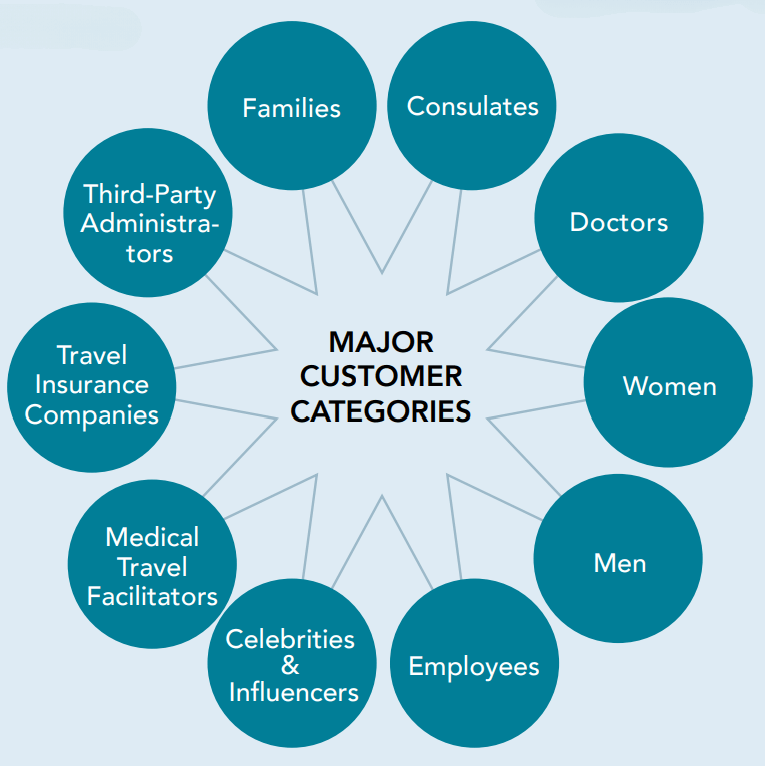
Keep in mind that you will often have several “customers.” The individual shopping for options may be heavily influenced by his or her relatives, a celebrity, or the opinion of a doctor or other healthcare professional. Sometimes a customer is referred by an insurance company, medical travel facilitator, or by a consulate, employer, or other type of agency. These too are “customers.” Think about how you can appeal to and attract each of these market segments to your business.
How does each market segment reach its decisions?
Are your customers basing their decisions solely on one factor? This scenario is seldom the case! Often the reputation or brand of the destination and / or the facility, cultural familiarity, language, distance, the website, credentials of the hospital, clinic, or the doctor, and other factors weigh in the decisions.
The recommendations of family, friends, and others may also have a big impact on these decisions. The most influential factors include:
- Reputation and brand of the destination
- Distance from home of residence • Costs of services and travel
- Reputation and brand of the spa, doctor, or clinic Familiarity / experience (prior visits)
- Cultural & language familiarity or distance
- Recommendations
- Ease / difficulty of obtaining a visa
- Awareness through marketing
Do not forget that big data and information digitalization can help you identify new segments and opportunities!
What are the priority needs and wants of each market segment?
Are your customers specifically looking for spa treatments with the bonus of fun and adventure or perhaps dental work or a hair transplant? Are they planning a more serious trip in order to have surgery such as joint replacement or their cancer treated? In each case, the priorities, needs, and wants of your customers will impact how you influence their decisions, and how you provide a superior patient or customer experience. Certain procedures or treatments are absolutely necessary, and patients may not want them at all! These situations create a very different set of priorities from the ones where guests are looking for some me-time in the spa.
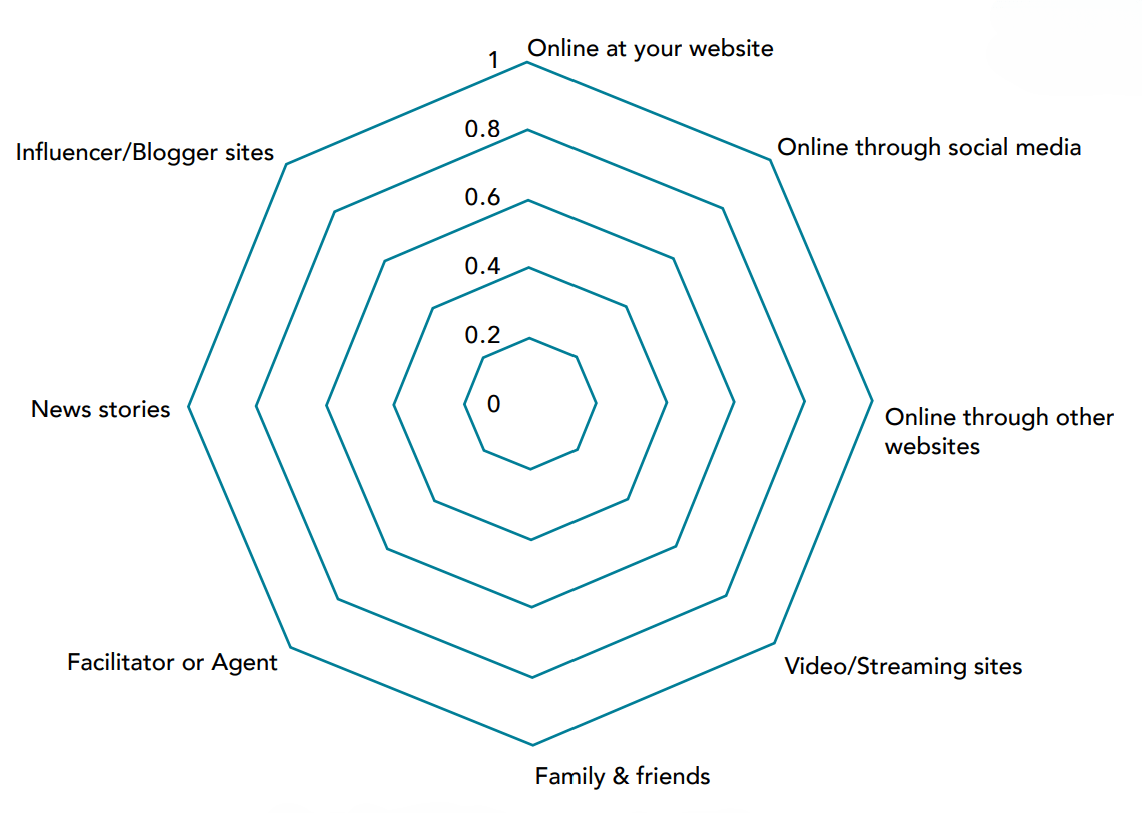
Where and how do market segments access information?
How do your customers, consumers, or patients find out about you?
- Online at your website
- Online through other websites
- Family & friends
- News stories
- Online through social media
- Video/Streaming sites
- Facilitator or Agent
- Influencer/Blogger sites
When does each prospective consumer decide?
For recreational, relaxation, and therapeutic services, there may be seasons during the year when customers choose your destination or location more often. Understanding this seasonality helps you plan your business, as well as your promotional budgets and activities. With spa treatments, the purchase decision is often made after the individual arrives at the destination. In this case, the first experience is as a visitor, not a health tourist.
Health and well-being motivations are secondary. This first experience is an opportunity to convert this one-time visitor to a returning, loyal health visitor. For more serious health or medical services, decisions may be made at the consumer’s home location when the need arises, regardless of the season. When people decide impacts many business decisions, including promotional planning, budgeting, and staffing levels. During the global pandemic, decisions will be delayed. Keeping your audiences aware remains an important marketing goal.
Why do consumers choose you?
Understanding motivations for the health traveler to choose you is enormously important. Being clear about your customers’ motivations will help you develop your marketing messages, using the right words that will resonate with your audiences.
Motivations can be very different, even among customers purchasing the same treatments or services. Some, but not all, of the possible key motivations frequently include:
- The desired service is not available in his / her home location
- Destination offers workplace wellness services (co)financed by employer based on contract
- Perceived superior quality at the destination service provider
- Lack of confidence in local service providers
- Delays in access in his/her home location
- Price
- Confidentiality
Stayed Tuned for Part 2 of Determining Your Health Tourism Audience
About the Marketing Handbook for Health Tourism
Health tourism and wellness travel markets are in turmoil. The marketing challenges and opportunities for health tourism destinations and providers of health, wellness, dental and medical services have never been greater – or more complicated! Established destinations and providers of health, wellness, dental and medical tourism are looking for ways to remain competitive, and new entrants to these competitive health, wellness and medical travel markets are looking for the path to success. The Marketing Handbook for Health Tourism offers practical, applicable insights for all these audiences.