
This is #3 of a series of 6 articles about the staffing crisis in long term care. Each of these topics – retention, recruitment & culture – has a direct bearing on the staffing crisis in the sector. There are no easy fixes, and only grounded, disciplined approaches will have long-term, beneficial effects. These articles address leadership and systems, and offer practical tips based on Stackpole & Associates’ experience and the best available organizational, behavioral and psychological research.
To solve your staffing crisis, contact Stackpole & Associates: istackpole@stackpoleassociates.com or call +1-617-719-9530
Read Retention: “If she would only just listen…”
Read Retention: “Sticky relationships”
How to get prospects in the door at your long-term care organization
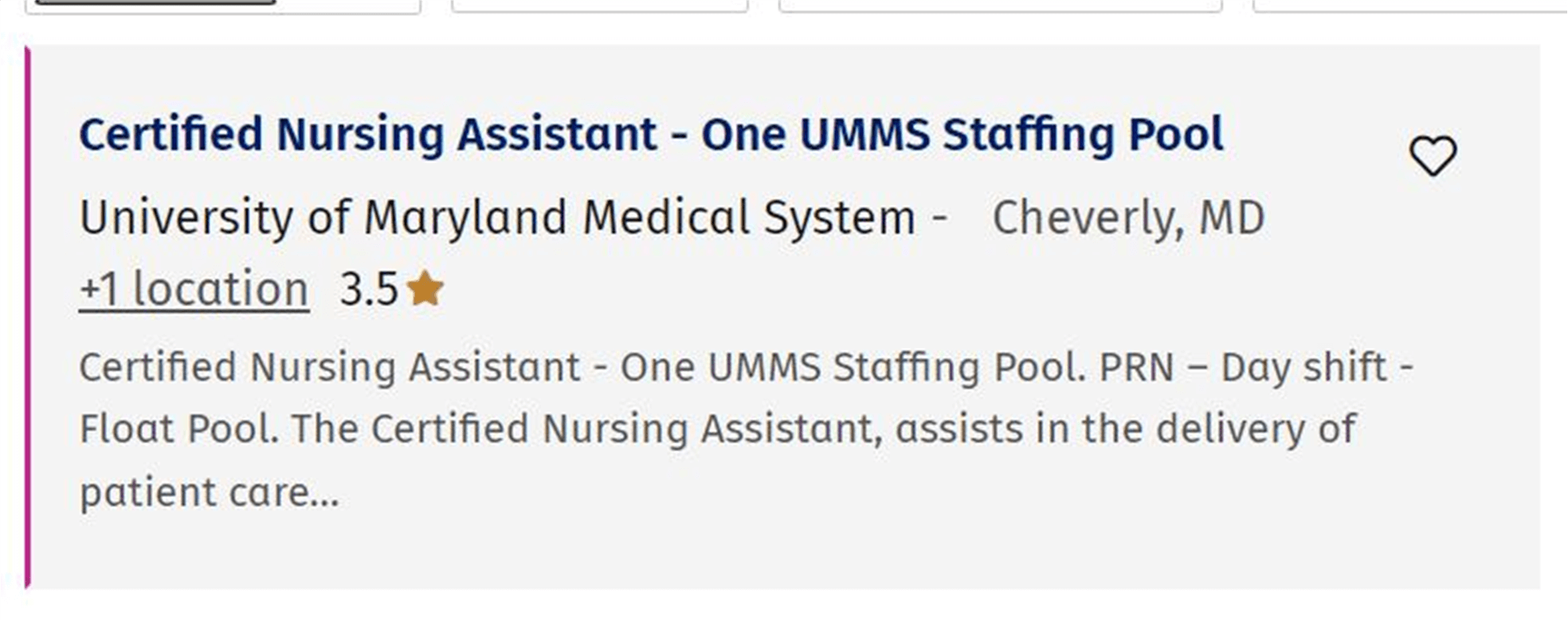
Recruiting staff in long term care is tough for many reasons, not the least of which is that the turnover is 50%–90%! Too often, the recruitment ads for nursing homes, long-term care and home health look like they were drafted by lawyers: name rank and serial number – that’s it!
 To recruit effectively, we need to understand who we’re recruiting, we need to know why they take these jobs (what their motivations are), and how to attract their attention (what messages to use). Then we can “get them in the door” where we have a chance to convince them (if they fit) to work with us.
In prior articles in this series, we focused on retention. With turnover rates so high, the first order of business is to stop the losses. The second, equally urgent need is to attract suitable job candidates for frontline caregiving positions.
We’re going to look at recruitment from two practical vantage points;
- How to attract prospective employees (“Getting them through the door”)
- The best channels to attract new employees (“Fish where the fish are”)
This article is about the demographics and motivations of working in long-term care. In the next article, we’ll cover recruitment channels.
How big a problem is recruitment?
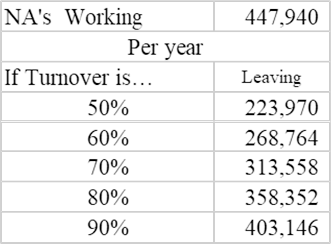 The recruitment challenges in long-term care, and in nursing homes in particular are enormous. There are about 450,000 nursing assistants (NAs) working in long-term care. If the turnover ranges from 50% – 90%, this means that 225,000 to over 400,000 NAs leave, and as many new ones are recruited every year! That’s a lot of “churn.”
This churn averages 1.3 to 2.3 positions every month, in every SNF in the US, and likely costs operators $5,800.00 per month or ~$70,000.00 per year. Adding the premiums paid for agency staff to cover the vacated shifts and lost productivity, these losses mount up quickly toward $150,000.00 – $225,000.000 per year, per SNF. The cost to the sector—over $1.05 billion per year!
This is big!
Who takes these jobs?
The demographics of the long-term care workforce describes who they are. The workforce is primarily women (90%), black or Hispanic, and often immigrants. About 70% have more than one job and are juggling childcare and adult care roles. Almost one in five (18%) of NAs live below the Federal Poverty Level (twice the national average) and these working poor are seven times more likely to live in the poorest socioeconomic neighborhoods. Sixty-three percent (63%) of NAs have less than $25,000.00 in assets, 61% report having no discretionary income and 36% rely on some form of public assistance.
Over half (55%) are single and 42% are married. Most live within 1.5 hours of the location of the nursing home and use public transportation to commute to work; ride-sharing is common. Forty percent (40%) have completed high school and 16% college. Over 70% express interest in further education, but not necessarily degree-based; most are interested in skills-based training.
These descriptive demographics offer important cues to how to more effectively recruit long-term care workers.
Profiles in Courage
The psychological profiles (psychographics) are also important and have a direct bearing on why these candidates are interested in jobs in long-term care in the first place. We encourage clients to build personality profiles (personae) that reflect the real people you want to recruit. Give them names and addresses, describe their relatives and friends – even their pets! Usually personae will cover the range of candidates; young, middle age, and retirement age. These examples are taken from an excellent report from the National Association of Homecare and Hospice[i]:
| Personae | Who are they? |
| Career Caregivers | They’ve worked in direct care for 3+ years |
| Caring on the Siders | More likely to have jobs in different fields; transient |
| Young and On the Move | Age 18-24; my job shouldn’t interfere with life! |
| Oodles of Offspring | Young householders w/ children; family before work! |
| Empty Nesters | Near retirement; getting out of the house |
| Single Moving Mommas | Single mothers; worry about making ends meet |
| Still Going Strong Retirees | “Retired” women 60+; fixed income & concerned about $ |
| From: Kurtyka, B. & Dombi, B. The State of The Direct Care Workforce 2022-2023. National Association for Home Care & Hospice. See: https://bit.ly/3LNDurW | |
Why frontline caregivers take their jobs
Motivations to take a job generally fall into two categories: 1. Extrinsic (e.g., pay, benefits, agreeable schedule, or location), and 2. Intrinsic (e.g., security, skills, altruism).[ii]
Extrinsic motivations for many long-term care jobs (especially pay and benefits for nursing assistants) are less compelling than other jobs in the same marketplace area. Unable to simply increase prices to the end-user to cover higher wages, like Amazon or McDonald’s, long-term care providers have to call on State or federal agencies for better pay for nursing assistants and other frontline care workers; these efforts haven’t always succeeded.[iii] However, pay could not be an absolute obstacle, or long-term care operators wouldn’t be able to fill the 1.3 – 2.3 positions that open up each month!
One of the extrinsic motivations that has not received as much attention is schedule flexibility. If a job candidate wants to be able to “fit” your job into the job prospect’s schedule, the flexibility the operator can offer the candidate can be an enormously important extrinsic motivator. Bus and train schedules also play a role in flexibility, as could available and affordable child care.
Intrinsic motivations to considering and accepting long term care work include:
- Empathy – the ability to identify with others’ pain, discomfort or sadness;
- Altruism – striving to higher causes than status, possessions, or money;
- Need to be needed – the drive to serve and to be needed by others, and;
- Friendship – wanting to be among harmonious and agreeable supervisors and colleagues.
What’s NOT on the list
- Prestige – working in long-term care is seen as a low-prestige job, and it’s unlikely that its perceived status among the general population will change anytime soon.
- Pay – compensation for frontline workers in long-term care, especially nursing assistants is poor, so payrate by itself is not an extrinsic motivator.
Messages & motivations
Putting this together, recruitment messages can be created to match the extrinsic and intrinsic motivations that we know are important to job prospects. The purpose here isn’t to write recruitment copy but to demonstrate how to weave the demographics, extrinsic and intrinsic motivators together.
For example:
Flexibility
We know that over half of the direct care workforce have a second job and an even higher proportion juggle dual or triple caregiver roles. Create messages that recognize this and appeal to the stress that candidates are living.
- You’re juggling a lot of things; your schedule here won’t be one of them
- You’ll fit right in – we’ll make sure
Friends
We know that healthcare workers often quit because their relationships with supervisors and / or co-workers are seen as intolerable.[iv] So, recruit for friendship and better relationships.
- Having friends around makes even a tough job better.
- Our supervisors have your back, not your neck.
Altruism
Serving a higher purpose and “giving back” are reported as important to frontline caregivers. Offering more meaningful work than an Amazon fulfillment center or at a fast-food restaurant will appeal to the correct intrinsic motivations.
- What could be more important than caring for someone in need?
- Work that is meaningful – not just a means to an end.
Recruit differently
Effective recruitment is a complex marketing challenge. To stand out from the noise of competing recruiters, it’s important to understand who you’re recruiting, appreciate their mindset and motivations and then create messages which reach them at an emotional, personal level.
To help solve your staffing crisis, contact Stackpole & Associates: istackpole@stackpoleassociates.com or call +1-617-719-9530
[i] Kurtyka, B. & Dombi, B. The State of The Direct Care Workforce 2022-2023. National Association for Home Care & Hospice. See: https://bit.ly/3LNDurW
[ii] For a good description of job-related extrinsic and intrinsic motivators see: Herrity, J. Intrinsic vs. Extrinsic Motivation: What’s the Difference? See: https://www.indeed.com/career-advice/career-development/intrinsic-extrinsic-motivation
[iii] Varney, S., Nursing Homes Bleed Staff as Amazon Lures Low-Wage Workers With Prime Packages. December 23, 2021. Kaiser Health News. See: https://bit.ly/3tdarog
[iv] Why Healthcare Workers Quit. J Walter Thomspon. 2003. See: https://bit.ly/46DwK7X